The Brawler’s Blueprint: A Technical Masterclass in Competitive Brawl Stars
The Brawler’s Blueprint: A Technical Masterclass in Competitive Brawl Stars
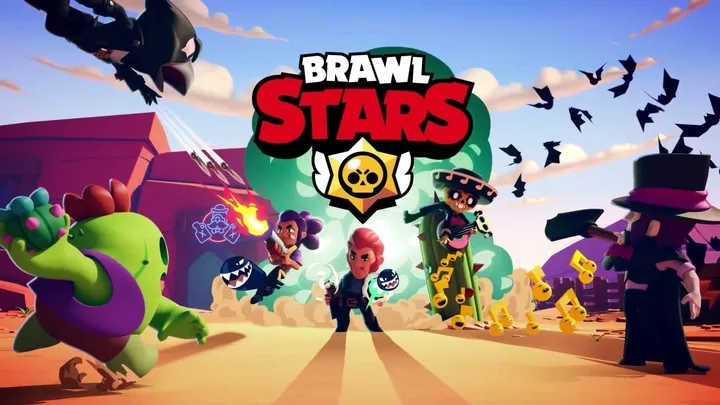
Brawl Stars is often perceived as a vibrant, accessible mobile hero shooter, but beneath its cartoonish aesthetic lies a mechanically dense ecosystem that rewards frame-perfect timing, spatial awareness, and complex resource management. To transition from a casual trophy pusher to a competitive master, a player must move beyond simply hitting shots and start treating the arena as a grid of tactical variables. This guide provides a technical deep-dive into the "How-To" of high-level play, focusing on the hidden physics of projectile movement, the mathematics of the "Laning Meta," and the psychological warfare of professional drafting. Whether you are aiming for a Power League legendary rank or looking to dominate the global leaderboards, success is found in the micro-decisions that occur in the milliseconds between every reload.
The evolution of a Brawl Stars player is defined by their relationship with "Information Asymmetry." At higher levels, the game becomes less about raw reflexes and more about predicting enemy movement based on reload speeds and Super charge ratios. In the following chapters, we will dissect the mechanical progression of a player, moving from the fundamentals of movement-based aiming to the advanced application of "Lane Control" and the technical management of the Hypercharge economy. This is the definitive manual for the aspiring God-tier Brawler.
1. The Physics of Aiming: Mastering Predictive and Movement-Based Targeting
Aiming in Brawl Stars is a three-dimensional problem solved in a two-dimensional space. At a high level, "Auto-aiming" is a death sentence, used only in extreme close-quarters panic situations. To master targeting, you must understand the "Projectile Velocity" of each Brawler. A Piper’s shot travels faster than a Brock’s rocket, requiring a smaller "Lead Distance." The technical goal is to aim not where the enemy is, but where they are forced to be based on the environmental bottlenecks.
Movement-based aiming, or "Strafe Aiming," is the most important micro-skill. This involves moving your Brawler in the same direction as your shot to extend its effective horizontal width, or moving in the opposite direction to "flick" a shot around a corner. By aligning your movement joystick with your aiming reticle, you reduce the angular change required to hit a moving target. This technique is particularly vital for Brawlers with multi-projectile attacks like Bo or Leon, where your movement determines the spread pattern of the arrows or blades.
Aiming Technique Hierarchy
- Leading the Shot: Predicting the enemy's path and firing ahead of their current position.
- Zoning: Firing toward a path the enemy wants to take to force them into a disadvantageous position.
- The "Juke-Predict": Observing an enemy's dodging pattern (e.g., they always dodge left) and aiming specifically for their habitual recovery spot.
2. Spatial Manipulation: The Fundamentals of Laning and Map Control
In competitive 3v3 modes like Gem Grab or Brawl Ball, the map is divided into three distinct zones: the Left Lane, the Mid, and the Right Lane. Mastering the "Lane" is the first step toward macro-dominance. A common mistake is "clumping," where multiple Brawlers attack the same target. This is inefficient; a master player knows that their primary job is to win their 1v1 matchup to secure "Control." Once you win your lane, you don't push the spawn; you "Pincer" the Mid, creating a 2v1 advantage for your teammate.
The "Mid" role is usually reserved for long-range or high-health Brawlers who can act as the anchor of the team. As the Mid, your goal is "Presence Management." You must be a threat that prevents the enemy from crossing the center line. If you fall back, your Laners lose their support and the map "collapses." The technical secret to map control is "Vision Poking"—using your shots to check bushes and keep the enemy visible on the map, effectively removing their ability to surprise your team.
3. Resource Management: Reload Rhythms and Ammo Tracking
Ammo is the most valuable currency in Brawl Stars. "Ammo Stealing" is a high-level concept where you bait an enemy into wasting their three shots while you keep yours. If an enemy Brawler is at zero ammo, they are defenseless for roughly 1.5 to 2.5 seconds. A master player tracks the reload bars of their opponents. For example, if you see a Mortis use all three dashes to travel, you know he has zero offensive capability for the next few seconds, making him a "Free Kill."
Reload Speed Categories
- Very Fast: Brawlers like El Primo can stay aggressive constantly.
- Normal: The standard rhythm; requires careful shot selection.
- Slow/Very Slow: Brawlers like Piper or Mico; every missed shot is a massive tactical failure that loses map pressure.
Understanding "Burst Windows" is also critical. Some Brawlers deal their damage instantly, while others deal it over time. To "How-To" win a duel, you must calculate if your burst can deplete the enemy's HP before their reload cycle allows them to finish you. This is why "Healing Breaks" are mandatory; stopping your fire for 3 seconds to trigger natural health regeneration is often better than firing a low-probability shot that keeps your regen timer reset.
4. Super Charge Optimization: The Art of the "Farm"
Your "Super" is your win condition. The technical mastery of Brawl Stars involves "Super Farming"—taking safe, low-risk shots specifically to charge your ultimate ability rather than to get a kill. For Brawlers like Tara or Gene, their regular attacks are mediocre, but their Supers are game-breaking. If you are at 90% Super charge, you should play extremely cautiously, as dying before you can activate your Super can shift the entire momentum of the match.
"Super Chaining" is the pinnacle of mechanical skill. This occurs when you use your Super in a way that hits multiple enemies, immediately recharging the Super for another use. For example, a Stu who hits a shot and dashes, or a Shelly who blasts a target at point-blank range, can theoretically have infinite Supers. To do this, you must learn the "Super-to-Attack" ratio of your Brawler—knowing exactly how many hits are required to reset the cycle.
5. The Hypercharge Economy: Timing the Ultimate Power Spike
Hypercharge has added a new layer of "Timing Meta" to the game. It is not just a buff; it is a "Tempo Tool." A common mistake is using Hypercharge as soon as it is charged. Competitive players save the Hypercharge for "Overlapping" with their Super and a full ammo bar. The technical goal is to use Hypercharge to break the "Stalemate." If both teams are poked down, the team that activates Hypercharge first usually forces a retreat or secures a team wipe.
Hypercharge Priority List
- Objective Defense: Using it to stop a 10-gem carrier or a massive Brawl Ball push.
- Siege Breaking: Using it to dive a Heist safe or clear a crowded Gem Grab mid.
- The "Counter-Hyper": Holding your Hypercharge specifically to use it when the enemy uses theirs, neutralizing their advantage.
6. Defensive Mechanics: Dodging, Juking, and Hitbox Manipulation
Dodging is a "Proactive" skill, not a reactive one. "Juking" involves moving in unpredictable patterns to bait shots. The technical secret is "Perpendicular Movement." It is significantly harder to hit a target moving left-to-right relative to your position than one moving toward or away from you. A master "Juker" will walk toward a Brawler and then sharply turn 90 degrees just as the enemy fires, exploiting the projectile's travel time.
"Hitbox Awareness" is equally important. Every Brawler has a circular hitbox at their feet. When hiding behind a wall, you must ensure that your "Foot Circle" is completely obscured, even if your Brawler’s head or hat is sticking out. You can also use "Wall-Hugging" to minimize the angle an enemy can hit you from. By staying close to a corner, you reduce the "Sight Cone" the enemy has, forcing them to overextend to find a line of sight on you.
7. Wall Mechanics and Environmental Interaction
Walls are not just obstacles; they are tactical shields. "Peek-Firing" is the technique of stepping out from a wall, firing a shot, and stepping back in before the enemy can react. Because Brawlers fire from their right side (usually), "Right-Hand Peeking" is statistically safer. You can see the enemy and fire while more of your hitbox remains behind the cover. Mastering the "Wall-Dance" allows low-health Brawlers to win 1v1s against higher-DPS opponents.
Wall Interaction Tips
- Wall-Breaking: If you are a long-range Brawler, use your Super to destroy the enemy’s cover.
- Wall-Preservation: If you are a tank (like Rosa or El Primo), never destroy your own walls; they are your only way to get close to the enemy.
- The "Bounce": Using Rico or Ruffs to hit enemies behind cover by calculating the reflection angles.
8. Mode-Specific Mastery: Strategies for the Arena
Every mode in Brawl Stars requires a different "Mental State." In Solo Showdown, the game is about "Survivalism" and "Third-Partying"—waiting for two players to fight and then cleaning up the winner. In Brawl Ball, the focus shifts to "Positioning" and "Ball Control." A master player knows how to "Self-Pass"—kicking the ball toward a wall and catching it after a dash to bypass defenders.
In Heist, the metric is "Damage Efficiency." Every point of ammo should be directed at the safe unless an enemy is a direct threat to your base. In Knockout, the game becomes "Permadeath Chess." You must play with "Infinite Patience," as a single death ends the round. The technical "How-To" for Knockout is to never take a 1v1 unless you have a health advantage, as "Trading Kills" is usually bad for the team with less utility.
9. Drafting and Team Synergy: The Power League Meta
In high-level Power League or Club League, the game is won in the "Draft." You must build a team that has a "Synergy Loop." This usually consists of a Main DPS, a Crowd Control/Utility, and a Tank/Aggro. If the enemy picks a Mortis, you must "Counter-Pick" with a Gale or a Surge to punish their dive. Drafting is about "Denial"—picking away the Brawlers that work best on the specific map's geometry.
Draft Synergy Examples
- The "Slow" Lock: Using Crow or Bea to slow enemies, making them easy targets for a Piper or Belle.
- The "Double Tank" Poco: Using Poco’s healing to keep two high-HP tanks (like Frank or Rosa) alive as they walk into the enemy spawn.
- The "Vision" Build: On bushy maps, using Tara’s gadget or Bo’s Star Power to remove the enemy's ability to hide.
10. The Psychological Edge: Panic Management and "The Clutch"
The final 30 seconds of a match are where "Mental Fortitude" is tested. "Panic-Firing" is the most common reason for losing a lead. When the countdown starts in Gem Grab, the goal is not to kill; it is to "Stall." Every second the enemy spends chasing you is a second they aren't getting gems. Master players use "Retreating Fire," shooting backwards while running away to keep the enemy at bay.
"The Clutch" is the result of mechanical muscle memory taking over. When you are the last player alive in a 1v2, you must "Isolate the Duel." Do not fight both at once; use the terrain to block one enemy’s vision while you 1v1 the other. By turning a 1v2 into two separate 1v1s, you can exploit your reload cycles to win an "Impossible" game. This psychological dominance is what separates the Champions from the Runners-up.
Conclusion
Mastering Brawl Stars is a journey through layers of mechanical and tactical complexity. It begins with the simple act of dragging an aiming joystick but culminates in a profound understanding of physics, economy, and human psychology. By internalizing the nuances of movement-based aiming, laning, resource management, and drafting, you transform the game from a chaotic brawl into a calculated victory. The arena is a laboratory where every shot is an experiment and every win is a proof of concept. Whether you are navigating the bush-heavy corridors of Snake Prairie or the open shooting galleries of Shooting Star, your success depends on your ability to process the game faster than your opponent. Take these strategies, refine your muscle memory, and ascend to the peak of the Brawling elite.